

Gas and Dust Sensor
MQ-3 Alcohol Detector Gas Sensor Module
Original price was: 100.00 EGP.80.00 EGPCurrent price is: 80.00 EGP.
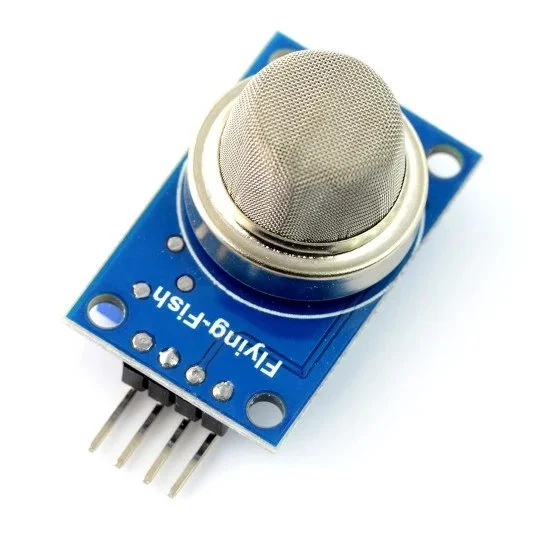
MQ-9 Carbon Monoxide Methane LPG Gas Sensor Module with 5V operation, analog and digital outputs, and an adjustable onboard sensitivity threshold. Suitable for detecting carbon monoxide and combustible gases in Arduino, microcontroller and alarm-system projects.
MQ-9 Carbon Monoxide Methane LPG Gas Sensor Module
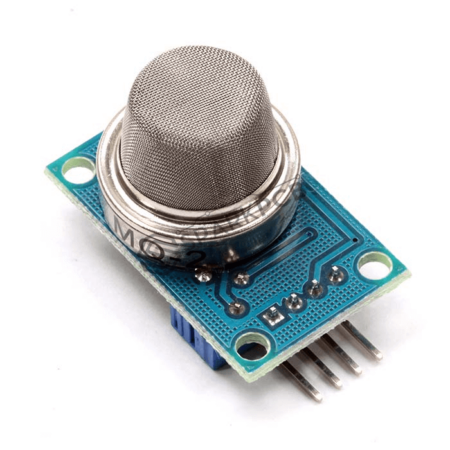
The MQ-9 Carbon Monoxide Methane LPG Gas Sensor Module is a compact semiconductor gas-detection board designed to respond to carbon monoxide and combustible gases including methane, propane and LPG. It combines an MQ-9 SnO₂ sensing element with an onboard comparator, sensitivity potentiometer, power indicator and digital-output indicator.
The module provides both an analog output for monitoring changes in sensor response and an adjustable digital output for threshold-based alarms. It can be integrated with Arduino boards, microcontrollers, alarm circuits and environmental-monitoring projects.
| Model | MQ-9 |
|---|---|
| Product Type | Carbon monoxide and combustible-gas sensor module |
| Module Operating Voltage | 5V DC |
| Sensing Material | SnO₂ |
| Target Gases | Carbon monoxide, methane, propane, LPG and combustible gases |
| CO Detection Range | 10–1000ppm |
| Methane / LPG Range | 500–10000ppm |
| Outputs | Analog AO and digital DO |
| Analog Output | Approximately 0–5V, depending on sensor response and circuit conditions |
| Digital Output | TTL low/high switching signal |
| Low Heater Voltage | 1.5V |
| High Heater Voltage | 5.0V |
| Heater Resistance | 33Ω ±5% |
| Heater Consumption | ≤350mW |
| Module Current | Approximately 150mA, depending on board and operating condition |
| Initial Preheat | At least 24 hours for initial stabilization |
| Operating Temperature | -10°C to 50°C |
| Module Dimensions | Approximately 32 × 20mm |
| Weight | Approximately 5g |
| Pin | Function |
|---|---|
| VCC | 5V positive power supply |
| GND | Ground connection |
| AO | Analog sensor-response output |
| DO | TTL digital threshold output |

The MQ-9 uses tin dioxide, or SnO₂, as its sensitive material. Its conductivity is relatively low in clean air and increases as the concentration of target gases rises. The onboard circuit converts this change into an analog signal and compares it with the threshold selected by the potentiometer to generate the digital output.
The raw MQ-9 sensing element uses different heater conditions for carbon-monoxide and combustible-gas response. Common four-pin modules are normally powered from a 5V input and may not automatically implement a precision high/low heater-control cycle. Applications requiring selective or quantitative measurement should use suitable heater control, calibration and signal processing.
For projects focused primarily on carbon monoxide, see the MQ-7 Carbon Monoxide Gas Sensor Module. For methane and LPG detection projects, compare it with the MQ-5 Methane and LPG Gas Sensor Module.




Tell us what you are building and we will help you find suitable components, modules, development boards and tools from our available range.