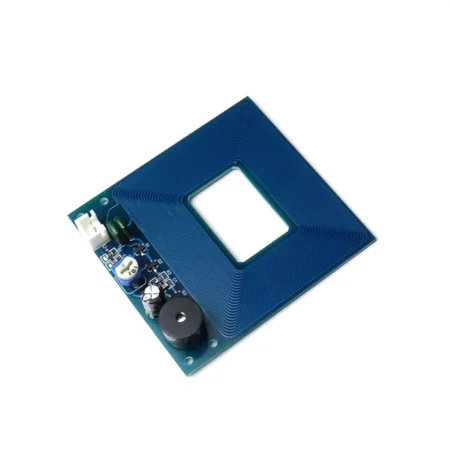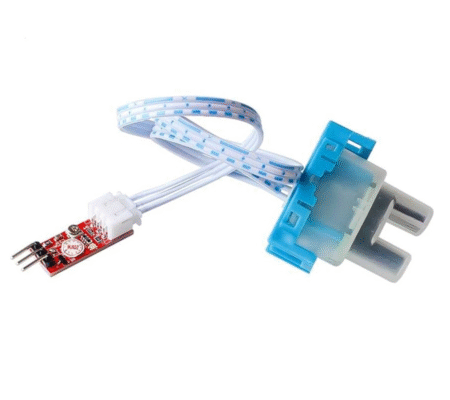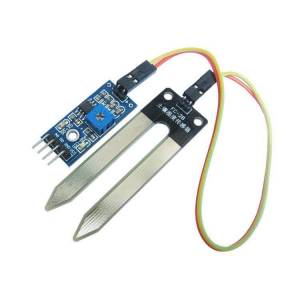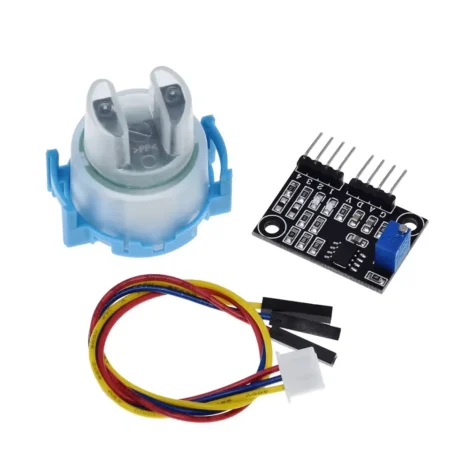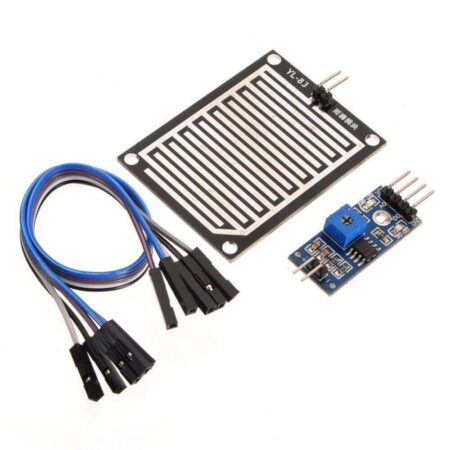
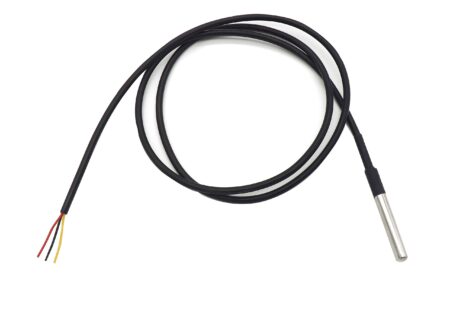
Analog TDS Sensor Module V1.0 (Gravity-style) — Waterproof Probe, 5V, Analog Output

Original price was: 800.00 EGP.Current price is: 550.00 EGP.

Compact Analog TDS Sensor Module V1.0 with waterproof probe and 5 V analog output. AC-excited measurement using LMV324-class front-end for stable EC/TDS readings. Ideal for RO/DI, aquariums, and hydroponics.

وحدة حساس TDS التناظري V1.0 مع مجس مقاوم للماء وخارج تناظري 5 فولت. قياس بإثارة شبه متناوبة ومعالجة منخفضة الضجيج لقراءات EC/TDS مستقرة—مناسبة للـRO/DI، الأحواض، والهيدروبونيك.


SKU Analog TDS Sensor V1.0 SKU SYS X8091 Availability In stock
Quantities are confirmed after reviewing your order. Orders are normally prepared and shipped within 3–5 business days. Online availability does not necessarily mean the product is currently available at the branch. تأكيد الكميات بيتم بعد مراجعة الأوردر، وتجهيز وشحن الطلب بيستغرق عادة من 3 إلى 5 أيام عمل. توافر المنتج على الموقع لا يعني بالضرورة توافره داخل الفرع، لذلك اعمل الأوردر مسبقًا لتأكيد الكمية وتجهيزه.
تحتاج مساعدة؟ تواصل معنا
Share
Fast shipping Delivery across Egypt
Flexible payment Cash and online options
Quantity confirmation Confirmed after order review
Technical support Help choosing compatible parts

Description

Analog TDS Sensor Module V1.0 (Gravity-style) — Waterproof Probe, 5V, Analog Output

Meet the Analog TDS Sensor Module V1.0—a compact, stable, and calibration-friendly board for measuring Total Dissolved Solids (TDS) and electrical conductivity (EC) of water. This version pairs a waterproof probe with a precision signal-conditioning board that uses a low-noise op-amp and an onboard oscillator to drive the sensing electrodes with an AC-like excitation—reducing electrode polarization and extending probe life. Read the analog voltage (AO) with your MCU, map it to ppm TDS or mS/cm EC, and you’re ready to monitor RO/DI systems, aquariums, hydroponics, or lab samples.

Highlights

  • 🔌 Simple 3-wire host interface: VCC, GND, AO to any 5V microcontroller (Arduino, ESP32 5V-tolerant via divider, etc.).
  • 📈 Linear, low-noise output: Precision conditioning around a LMV324-class op-amp for stable readings with averaging.
  • 🔄 AC excitation driver: CD4060-class oscillator helps minimize electrode polarization and measurement drift.
  • 💧 Waterproof probe: Durable stainless electrodes with long lead for immersion measurements.
  • 🎛️ Trim for range: Onboard trimmer (where present) to fine-tune scaling for your container and target ppm.
  • 🧪 Calibratable to ppm or EC: Quick 1- or 2-point calibration using standard solutions (e.g., 1413 μS/cm).
  • 🧰 Compact PCB: About 42 × 32 mm with four M3 mounting holes; JST-style headers for neat wiring.
  • 🧲 Reverse-polarity hints & silkscreen: Clear “A + –” marking near the host header, probe header keyed.

What you can build

  • 🐠 Aquarium & reef monitoring (ATO/RODI quality, dosing checks)
  • 🥬 Hydroponics nutrient tracking alongside pH & temperature
  • 🚰 RO/DI output quality verification (e.g., alarm when TDS rises)
  • 🧪 Education & lab experiments on conductivity/TDS
  • 🏭 Light industrial water checks (non-hazardous fluids)

How it works

  • Excitation: The board drives the probe with a low-amplitude AC-like signal derived from a CD4060 oscillator stage.
  • 🌀 Sensing: Conductivity of the solution changes the probe impedance; the analog front-end (LMV324 op-amp family) converts it to a voltage.
  • 📊 Reading: Your controller samples AO and converts it to EC (μS/cm) and then TDS (ppm) using a temperature-compensated formula and your calibration constants.

Mechanical overview

  • 📐 PCB size: ~42 mm × 32 mm (1.65″ × 1.26″)
  • 🕳️ Mounting: 4 × corner holes (≈M3)
  • 🔌 Connectors: Right 3-pin host header marked A + –; left JST for probe (waterproof).
  • 🖤 Finish: Black PCB, white silkscreen “TDS Meter V1.0”.


Pinout & wiring

Host side (3-pin header, marked near “A + –”):

  • 🟢 A (AO) — Analog output to MCU ADC
  • 🔴 + (VCC) — 5 V supply
  • – (GND) — Ground

Probe side (JST header):

  • Probe + / Probe – — Differential electrodes (most cables: 2 conductors; third pin unconnected on some boards)

Typical MCU wiring

  • AO → Arduino A0 (or to ESP32 ADC with proper scaling/reference)
  • VCC → 5 V, GND → GND
  • Optional NTC/TEMP input: add your own sensor (DS18B20/NTC) for compensation in code.

Quick start (Arduino-style)

  • 🔌 Power at 5 V.
  • 🧪 Immerse the probe in your sample; avoid bubbles or touching container walls.
  • 🧭 Rinse between samples with DI water.
  • 🧮 Take multiple ADC readings (e.g., average 30–50).
  • 🌡️ Apply temperature compensation (β ≈ 2%/°C for EC; adjust as needed).
  • 🧷 Convert EC→TDS: TDS(ppm) ≈ k × EC(μS/cm). Common k = 0.5 (calibrate to your standard).

Calibration (recommended)

  • 🧴 Prepare: 0 ppm proxy (fresh DI or distilled) and one standard (e.g., 1413 μS/cm) or two standards (e.g., 1413 & 2764 μS/cm).
  • 🧭 Record ADC in each standard at a known temperature.
  • 🧠 Fit linear mapping ADC → EC; store slope & offset in code.
  • 🔁 Re-check monthly; clean probe with mild rinse if drift appears.

Best practices

  • 🥶 Keep liquid temperature stable; compensate in firmware.
  • 🫧 Avoid bubbles and agitation while reading.
  • 🧼 Don’t scrape or sand electrodes; rinse instead.
  • 🧯 Do not exceed low-voltage aqueous solutions; avoid solvents/acids/alkalis.

Demo video


Specifications

CategoryParameterValue / Detail
ElectricalSupply Voltage5 V DC (typ. 4.5–5.5 V)
Current Consumption~10–20 mA (board only, typical) (assumption)
OutputAnalog AO (0–~3.0–4.0 V typ. vs EC)
ExcitationAC-like drive using CD4060 oscillator stage
Analog Front-EndLMV324A low-power quad op-amp (or equivalent)
PerformanceUsable EC Range~0–5 mS/cm typical (application/calibration dependent)
Typical TDS Range0–1000 ppm (extended >2000 ppm with calibration) (assumption)
Temp CompensationIn firmware (user-defined coefficient)
MechanicalPCB Dimensions~42 × 32 mm
Mounting Holes4 × M3 approx.
ProbeWaterproof, stainless electrodes; cable length varies (assumption 1 m)
InterfacesHost HeaderA, +, – (AO, VCC, GND)
Probe Header2-wire probe via JST
EnvironmentOperating Temp0–40 °C board, 0–50 °C probe (assumption)
ComplianceRoHS-style materials(assumption)


Integration tips

  • 🧰 If your MCU ADC reference is 3.3 V, ensure AO never exceeds that (voltage divider or read at 5 V-tolerant input).
  • 📉 Add a small RC on AO (e.g., 1 kΩ + 0.1 μF) to reduce sampling noise.
  • 🔋 Keep analog and digital grounds common at one point to minimize offsets.
  • 🌡️ Always store the calibration temperature alongside calibration values.

TDS sensor, EC sensor, Analog TDS Sensor Module V1.0, gravity tds, water conductivity sensor, ppm sensor, hydroponics tds.


وحدة حساس TDS التناظري V1.0 — مجس مقاوم للماء، 5 فولت، خرج تناظري

توفر وحدة حساس TDS التناظري V1.0 طريقة موثوقة وبسيطة لقياس إجمالي المواد الصلبة الذائبة (TDS) والتوصيلية الكهربائية للماء. تتكوّن من مجس مقاوم للماء مع لوحة تكييف إشارة تستخدم مضخماً منخفض الضجيج ومذبذباً على النمط المتقطع لتغذية الأقطاب بإشارة شبه متناوبة، ما يقلل استقطاب الأقطاب ويحافظ على الاستقرار على المدى الطويل. يقرأ المتحكم الجهد التناظري (AO) ويحوّله إلى ppm TDS أو EC بعد المعايرة والتعويض الحراري.

المزايا

  • 🔌 توصيل ثلاثي بسيط: VCC، GND، AO لأي متحكم 5 فولت.
  • 📈 خرج مستقر منخفض الضجيج: مع معالجة تماثلية اعتمادًا على LMV324A أو ما يعادله.
  • 🔄 إثارة شبه متناوبة: بمكوّن CD4060 لتقليل انجراف القياس.
  • 💧 مجس مقاوم للماء: أقطاب من الستانلس وكابل طويل للغمر.
  • 🧪 معايرة سهلة: نقطة أو نقطتان باستخدام محاليل معيارية (مثل 1413 μS/cm).
  • 🧲 لوحة مدمجة: أبعاد تقارب 42 × 32 مم مع فتحات تثبيت.
  • 🧭 علامات واضحة: طرف المضيف معلّم A + – والموصل المخصص للمجس مفاتيحه واضحة.

الاستخدامات

  • 🐠 مراقبة جودة مياه الأحواض والـRO/DI
  • 🥬 الهيدروبونيك وضبط التغذية
  • 🚰 تحذير عند ارتفاع TDS بعد الفلاتر
  • 🧪 تجارب التعليم والمختبر

التوصيل

جهة المتحكم:

  • 🟢 A (AO) إلى دخل ADC
  • 🔴 + (VCC) 5 فولت
  • – (GND) أرضي

جهة المجس:

  • Probe + / Probe – — قطبان نشطان؛ في بعض اللوحات يظهر موصل بثلاثة أرجل مع استخدام رجلين فقط.

البدء السريع

  • شغّل على 5 فولت، اغمر المجس، انتظر ثواني للاستقرار.
  • خذ متوسط قراءات متعددة، طبّق تعويض الحرارة.
  • حوّل EC → TDS بـ TDS ≈ 0.5 × EC(μS/cm) (ثم عاير حسب معيارك).

المعايرة

  • استخدم ماءً منزوع الأملاح كنقطة صفر ومحلولاً معيارياً (1413 μS/cm) أو معيارين.
  • سجّل القراءة عند درجة حرارة معروفة واضبط ثابت التحويل.
  • اغسل المجس بماء DI بعد كل عينة.

المواصفات

الفئةالبندالقيمة
كهربائيجهد التشغيل5 فولت DC
استهلاك التيار~10–20 mA (افتراض)
المخرجAO تناظري
الإثارةإشارة شبه متناوبة باستخدام CD4060
تماثليالمضخمLMV324A أو مكافئ
الأداءمجال EC~0–5 mS/cm (بالاعتماد على المعايرة)
مجال TDS0–1000 ppm نموذجي (قابل للتوسعة)
ميكانيكيأبعاد اللوحة~42 × 32 مم
فتحات التثبيت4 × M3 تقريبا
المجسالنوعمقاوم للماء، أقطاب من الستانلس
الواجهاتطرف المضيفA، +، –
البيئةحرارة التشغيل0–40 °م للوحة، 0–50 °م للمجس (افتراض)

أفضل الممارسات

  • ثبّت الحرارة أو طبّق التعويض في البرنامج.
  • تجنّب الفقاعات والملامسة لجدار الإناء أثناء القياس.
  • لا تستخدم المذيبات أو الأحماض/القواعد القوية.

فيديو توضيحي

مستشعر TDS، حساس التوصيلية، Analog TDS Sensor Module V1.0، حساس ppm، حساس مياه للهيدروبونيك.


Attachments


DFRobot Gravity SEN0244, Generic TDS Kit V1.0, Keyestudio TDS, MakerSelectronics TDS, ProBots Analog TDSwater conductivity sensor, EC sensor, TDS meter module, ppm sensor for arduino, hydroponics EC TDS, RO DI TDSanalog tds board, gravity tds sensor, tds probe kit, ec meter module


Related Products

Products With Similar Tags