Description
MECHANIC AD‑223 Flux Paste 10ml (Syringe Kit with Applicator & Tips)
MECHANIC AD‑223 Flux Paste 10ml is a versatile, mildly‑activated rosin paste engineered for precision PCB rework and micro‑soldering. The 10‑millilitre syringe delivers controllable dots on IC pins, FPC seats and pad arrays, while the paste’s balanced activation window promotes fast wetting, bright joints and minimal spatter. Whether you are drag‑soldering fine‑pitch packages, wicking bridges or touching up oxidized pads, AD‑223 helps flux the surface, dissolve oxides, improve flow and shorten dwell time—all with residues that clean easily in IPA or dedicated PCB cleaners.
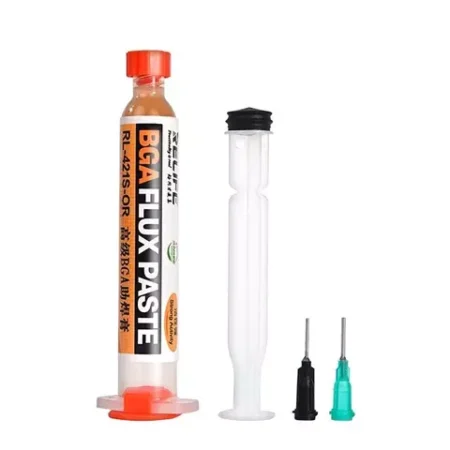
The retail kit typically includes the prefilled 10 ml syringe, a manual plunger/pusher rod and dispense tips (fine‑gauge, colour may vary by batch). Images show the familiar green sleeve with FLUX PASTE branding and “Alliance Design” livery—commonly found on mobile‑repair benches, laptop service centres and training labs.
Why technicians like AD‑223
✅ Controlled application — The syringe format lets you place a film or micro‑dot exactly where needed without flooding nearby components.
🔥 Fast wetting, glossy fillets — Active rosin chemistry speeds oxide removal and promotes smooth flow, so solder forms concave fillets instead of dull blobs.
🧼 Residues wipe off — Post‑reflow residues are removable with isopropyl alcohol (IPA) or PCB cleaners; many joints look neat even without a full wash.
🧯 Temperature‑friendly — Works reliably around common tip settings (approx. 300–360 °C); useful on both leaded (Sn60/63) and lead‑free alloys.
🧰 Multi‑role — Ideal for drag soldering, reballing assist, pad retinning, wire‑to‑pad work, and wicking bridges cleanly.
🧪 Consistency — Paste viscosity holds shape on vertical edges yet spreads thinly under heat for uniform coverage.
Typical use cases
- SMD rework: TSSOP/QFP/SOIC drag soldering; dot on the first and last pins, then sweep.
- Connector service: FPC seats and tight board‑to‑board connectors; apply a hairline film to pin rows.
- Pad revival: Retin dull/oxidized pads before placing jumpers or replacement parts.
- Bridge cleanup: Add a tiny amount, then wick; flux lowers surface tension so bridges lift in a single pass.
- Reballing support: Helps hold balls in place and improves wetting during reflow on small packages.
- Through‑hole assist: On shield tabs and ground lugs, the paste accelerates heat transfer and reduces dwell time.
Pro tips for perfect joints
🔧 Less is more: A thin film usually outperforms a large blob. Excess flux can brown or bubble and trap contaminants.
🧽 Mind the cleanup: If the board must be pristine (optical paths, sensors), finish with IPA + lint‑free swabs.
🌡️ Tune temperature: Start around 330–350 °C for leaded work; raise slightly for heavy ground planes; drop for delicate pads.
🧲 Match solder wire: Pair with 0.3–0.5 mm leaded wire for fine‑pitch or 0.6–0.8 mm where pads are larger.
🧴 Storage discipline: Cap tightly; store cool and dry. Avoid prolonged exposure to hot benches or direct sunlight to preserve activity.
Specifications
| Parameter | Value |
|---|
| Product | MECHANIC AD‑223 Flux Paste |
| Form | Paste flux in 10 ml syringe |
| Chemistry | Rosin‑based, mildly activated (RMA‑style) |
| Activation | Fast wetting for micro‑soldering and rework |
| Viscosity | Thixotropic paste — holds shape, spreads under heat |
| Compatibility | Leaded (Sn60/63) and lead‑free (SAC) solder |
| Typical tip temp | ≈300–360 °C (adjust to copper mass) |
| Cleaning | Removable with IPA / PCB cleaners |
| Included | 10 ml syringe, manual plunger, dispense tips (x2 typical) |
| Shelf & storage | Cool, dry, cap sealed; avoid contamination |
What’s in the pack
- 1 × AD‑223 Flux Paste 10 ml (pre‑filled syringe)
- 1 × Manual plunger / pusher rod
- 2 × Fine‑gauge dispense tips (count may vary by batch)
Step‑by‑step: drag soldering with AD‑223
- Tin the tip with a small solder bead.
- Apply a whisper of AD‑223 along the pin row.
- Set temperature ≈ 330–350 °C and drag the bead along the row; let flux pull solder where needed.
- Reset the bead on brass wool as required.
- Inspect under magnification; if a bridge remains, add a touch of flux and wick once.
- Finish with a light IPA wipe if a spotless board is required.
Safety & handling
- Use with ventilation or a small fume extractor.
- Avoid eye/skin contact; wash hands after handling.
- Keep out of reach of children; not for food‑contact surfaces.
- Do not mix different flux chemistries in the same area.
Compatibility & pairing
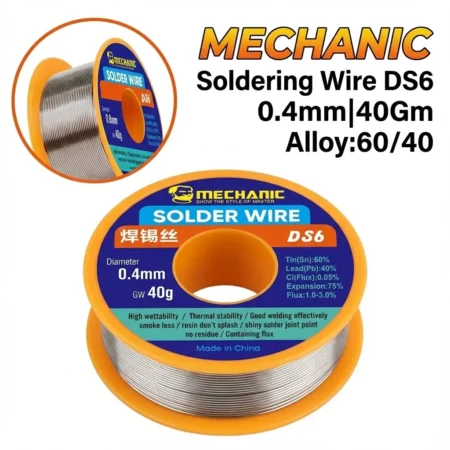
- Solder wire: Works great with Mechanic DS6 60/40 and other rosin‑core wires.
- Cleaning: IPA 99.9% and lint‑free swabs for final finish.
- Tools: Temperature‑controlled iron, brass wool/tip cleaner, micro tweezers and microscope visor.
FAQs
Does AD‑223 require cleaning?
No for many repairs; however, for optical areas or conformal‑coated assemblies, clean with IPA.
Is it corrosive?
It’s a mild rosin‑based activator designed for electronics; avoid leaving residues long‑term on high‑impedance paths.
Can I use it with lead‑free?
Yes—the activation helps SAC alloys wet faster; adjust heat accordingly.
What colour is the paste?
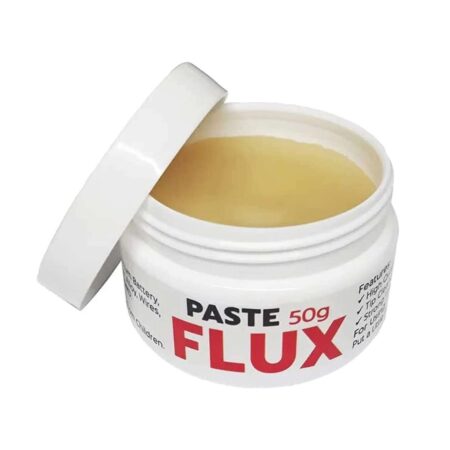
Light amber/tan; colour can vary slightly by batch without affecting performance.
معجون فلكس MECHANIC AD‑223 سعة 10 مل (حقنة مع بلف/بشر ونيودلز توزيع)
MECHANIC AD‑223 بعبوة 10 مل هو معجون فلكس معتدل التنشيط قائم على الرّوزن ومصمّم لأعمال إعادة اللحام والإصلاح الدقيق على لوحات الدوائر. يسمح تصميم الحقنة بوضع نقطة أو طبقة رفيعة بدقة على أرجل الـIC، مقاعد FPC، وصفوف البادّات، بينما تضمن التركيبة النشطة بللًا سريعًا وتدفّقًا متّزنًا ولمعانًا واضحًا للحام مع تناثر منخفض. يساعد AD‑223 في إذابة الأكاسيد وتحسين انتقال الحرارة وتقصير زمن التلامس؛ وبعد الانتهاء، يمكن إزالة البقايا بسهولة باستخدام آيزوبروبانول (IPA) أو منظّفات اللوحات.
تأتي المجموعة عادةً مع حقنة 10 مل مملوءة ومعها مكبس يدوي وإبر توزيع دقيقة (قد يختلف اللون والعدد قليلًا حسب الدفعة). تظهر الصور الغلاف الأخضر المميّز مع عبارة FLUX PASTE وشعار “Alliance Design”—وهو مشهد مألوف في ورش صيانة الهواتف واللابتوب ومختبرات التدريب.
لماذا يفضّله الفنيّون
✅ تحكّم في الجرعة — يتيح شكل الحقنة وضع طبقة رفيعة أو نقطة دقيقة تمامًا حيث تحتاج، دون إغراق المكوّنات المجاورة.
🔥 بلل سريع ولمعان — تركيبة روزن نشطة تُسرّع إزالة الأكسدة وتعزّز تدفّق القصدير ليكوّن فيليه مقعّرة ناعمة بدلًا من كتل باهتة.
🧼 بقايا سهلة الإزالة — غالبًا ما تُزال بقايا ما بعد اللحام بمسحة IPA؛ وتبدو اللوحة نظيفة حتى دون غسيل كامل.
🧯 نافذة حرارة مريحة — يعمل بثبات حول إعدادات الرؤوس الشائعة (300–360°م تقريبًا) مع قصدير رصاصي أو خالٍ من الرصاص.
🧰 متعدد الاستخدامات — مثالي لـ السحب على الأرجل، مساعدة الـReballing، إعادة قصدرة البادّات، سلك إلى بادّ، وسحب الجسور بفتيل نظيف.
🧪 قوام متوازن — لزج يحافظ على الشكل على الحواف العمودية، ثم ينساب رقيقًا عند التسخين لتغطية متجانسة.
استخدامات شائعة
- إصلاح SMD: سحب على حزم TSSOP/QFP/SOIC؛ ضع نقطة على أول وآخر رجل ثم اسحب بخرزة القصدير.
- خدمة الموصلات: مقاعد FPC والوصلات الدقيقة؛ ضع طبقة شعرة على صف الأرجل.
- إنعاش البادّات: إعادة قصدرة البادّات الباهتة/المؤكسدة قبل القفزات أو الاستبدال.
- تنظيف الجسور: أضف لمسة فلكس ثم استخدم الفتيل؛ يخفض التوتّر السطحي فتُزال الجسور بتمريرة واحدة.
- مساندة إعادة الكور: يثبّت الكرات ويحسّن البلل أثناء إعادة اللحام للحِزَم الصغيرة.
- مساعدة الثقوب المثبتة: على ألسنة الشاسيه والأرضي، يُحسّن انتقال الحرارة ويقلّل وقت التلامس.
نصائح احترافية
🔧 القليل يكفي: طبقة رفيعة تتغلب غالبًا على الكمية الكبيرة؛ الفائض قد يتحوّل للون بني أو يحبس شوائب.
🧽 نظافة ما بعد العمل: للمناطق البصرية والمستشعرات، أنهِ بمسحة IPA ومسحات خالية من الوبر.
🌡️ اضبط الحرارة: ابدأ 330–350°م مع القصدير الرصاصي؛ ارفع قليلًا للمساحات الأرضية الثقيلة؛ اخفض للبادّات الحساسة.
🧲 طابق سلك القصدير: استخدم 0.3–0.5 مم للأرجل الدقيقة و0.6–0.8 مم للبّادات الأكبر.
🧴 التخزين: أغلق بإحكام واحفظه باردًا وجافًا بعيدًا عن أشعة الشمس المباشرة للحفاظ على النشاط.
المواصفات
| البند | القيمة |
|---|
| المنتج | MECHANIC AD‑223 Flux Paste |
| الشكل | معجون فلكس في حقنة 10 مل |
| الكيمياء | روزن معتدل التنشيط (RMA) |
| التنشيط | بلل سريع لأعمال الإصلاح واللحام الدقيق |
| اللزوجة | معجون تكسوتروبي يحافظ على الشكل ثم ينتشر مع الحرارة |
| التوافق | قصدير رصاصي وخالٍ من الرصاص |
| حرارة الرأس المعتادة | ≈300–360°م (حسب كتلة النحاس) |
| التنظيف | IPA أو منظّفات لوحات |
| المتضمّنات | حقنة 10 مل + مكبس يدوي + إبر توزيع (عدد تقريبي 2) |
| التخزين | مكان بارد وجاف، إغلاق محكم |
ملاحظة: قد تختلف تفاصيل التغليف (لون الحقنة/عدد الإبر) بين الموردين؛ الوظيفة واحدة: تطبيق معجون فلكس مضبوط لأعمال إلكترونية.
محتويات العبوة
- 1 × حقنة AD‑223 سعة 10 مل.
- 1 × مكبس يدوي (Plunger).
- 2 × إبرة توزيع دقيقة (قد يختلف العدد حسب الدفعة).
خطوات سريعة لعملية سحب محترفة
- قصدر السن بخرزة صغيرة.
- ضع طبقة رفيعة من AD‑223 على صف الأرجل.
- اضبط الحرارة ~330–350°م واسحب الخرزة؛ الفلكس يقود القصدير.
- نظّف السن على صوف نحاسي حسب الحاجة.
- افحص بالمكبر؛ لو وُجد جسر، أضف لمسة فلكس وفتيل مرة واحدة.
- لمسة نهائية بمسحة كحول آيزوبروبانول عند الحاجة.
السلامة والتعامل
- استخدم شفاط أبخرة أو تهوية جيدة.
- تجنّب ملامسة العين/الجلد، واغسل اليدين بعد الاستخدام.
- أبعده عن الأطفال؛ غير مخصّص لأسطح الطعام.
- لا تخلط كيميائيات فلكس مختلفة في نفس بقعة العمل.
التوافق والمكملات
- سلك القصدير: يتوافق مع Mechanic DS6 60/40 وغيرها من الأسلاك ذات قلب الرّوزن.
- التنظيف: IPA 99.9% ومسحات خالية من الوبر.
- الأدوات: كاوية مضبوطة الحرارة، صوف نحاسي/منظف سن، ملاقط دقيقة ومكبر بصري.
أسئلة شائعة
هل يحتاج إلى تنظيف؟
في كثير من الحالات لا؛ لكن في المسارات البصرية أو عند الحاجة لمعيار نظافة عالٍ يُنصح بمسحة IPA.
هل هو مُتآكل؟
هو فلكس روزن معتدل مُصمّم للإلكترونيات؛ تجنّب ترك البقايا طويلًا على المسارات عالية المقاومة.
هل يعمل مع الخالي من الرصاص؟
نعم—يعزّز البلل مع سبائك SAC؛ عدّل الحرارة وفق الحاجة.
لون المعجون؟
كهرماني فاتح؛ وقد يختلف قليلًا بين الدُفعات دون تأثير وظيفي.
flux paste syringe / حقنة معجون فلكس؛ RMA rosin flux / فلكس روزن معتدل؛ micro‑solder flux / فلكس لحام دقيق؛ drag‑solder flux / فلكس سحب الأرجل؛ reballing assist flux / فلكس مساعدة ريبولينغ.
فلكس معجون، معجون قصدير، كريم فلكس، فلكس 10 مل.
fine‑pitch rework flux, syringe flux for PCB, IPA cleanable flux, QFP drag soldering, pad retinning flux.
AD223 / AD‑ 223 / flux paset / fluxe paste 10ml.
Amtech NC‑559, Kester RMA pastes, RELIFE RL‑404 flux.
“flux paste syringe 10ml”, “RMA rosin flux for phone repair”, “drag soldering flux”.