Arduino
Arduino groups development boards, microcontrollers and related prototyping hardware. Check the processor or controller, logic voltage, interfaces, memory, pinout, programming method and board compatibility for the project.

 Brand
Arduino
Brand
Arduino Arduino Leonardo is a 5 V ATmega32U4 board with native USB, 20 digital I/O (7 PWM), up to 12 analog inputs, and HID support—perfect for keyboard/mouse/MIDI projects, custom controllers, education, and rapid prototyping.
Arduino Leonardo لوحة 5 فولت بمعالج ATmega32U4 وUSB أصلي، 20 خط I/O (منها 7 PWM) وحتى 12 مدخلًا تماثليًا، مع دعم HID—مثالية لمشاريع لوحة المفاتيح/الفأرة وMIDI والتعليم والنمذجة السريعة.
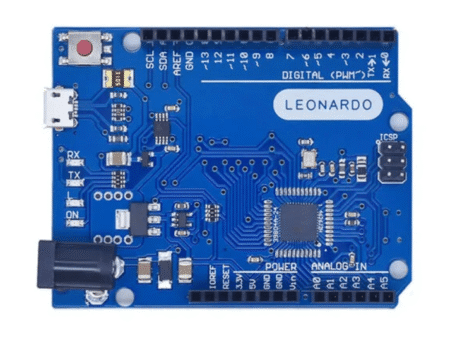
Meet Arduino Leonardo—the classic 5 V development board built around the ATmega32U4 with native USB. Unlike boards that rely on a separate USB-to-serial chip, Leonardo talks USB directly, so it can appear to your computer as a keyboard, mouse, gamepad, MIDI device, or a virtual COM port—all from your sketch. This makes it a favorite for human-interface projects, creative controllers, automation, data-logging, and STEM classrooms where rapid iteration matters.
✅ Native USB HID: emulate keyboard/mouse/MIDI without extra firmware or bridges.
🔌 Plug & upload: micro-USB programming with auto reset; works with the modern Arduino IDE.
🧠 ATmega32U4 @ 16 MHz: 32 KB flash (≈28 KB usable), 2.5 KB SRAM, 1 KB EEPROM.
🧲 Versatile I/O: 20 digital I/O, 7 PWM, up to 12 analog inputs; UART, I²C, SPI, external interrupts.
🔄 USB Serial + HW UART: keep pins 0/1 free while logging over USB CDC.
🛡️ Shield-friendly: R3 headers, ICSP, VIN, 5 V/3.3 V rails, on-board power management.
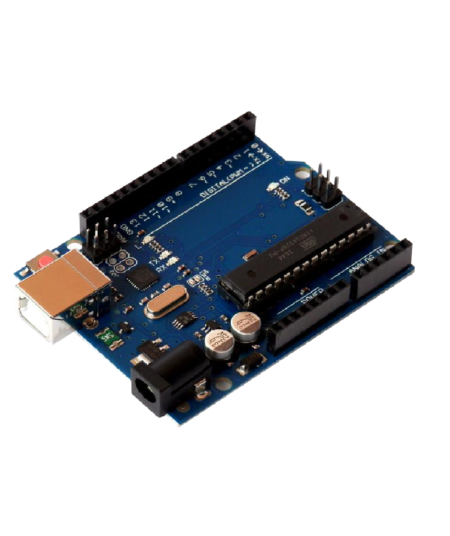
🧩 Arduino Leonardo board (ATmega32U4, R3 header layout)
📄 Quick-start reference (pinout, power, upload steps)
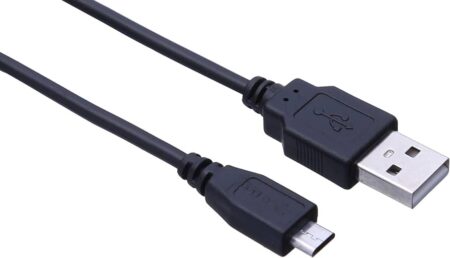
⚠️ USB cable not included (use a good micro-USB data cable)
📸 HID-ready examples: Keyboard, Mouse, MIDI, Joystick.
💾 USB CDC serial for logs and configuration.
⚙️ Timers, interrupts, I²C, SPI for sensors and actuators.
🔒 Bootloader with auto-reset for one-click uploads.
🌱 Massive ecosystem of libraries and shields.
| Parameter | Arduino Leonardo |
|---|---|
| MCU | ATmega32U4, 16 MHz |
| Operating Voltage | 5 V |
| Input Voltage (recommended) | 7–12 V (VIN / barrel jack) |
| Digital I/O Pins | 20 (7 PWM) |
| PWM Pins | 3, 5, 6, 9, 10, 11, 13 |
| Analog Inputs | Up to 12 (A0–A11, some shared) |
| DC Current per I/O | ≤ 40 mA (design ≤ 20 mA) |
| Flash / SRAM / EEPROM | 32 KB (4 KB boot), 2.5 KB, 1 KB |
| Interfaces | USB CDC/HID, UART (0/1), I²C (SDA=2, SCL=3), SPI (ICSP) |
| External Interrupts | 0, 1, 2, 3, 7 |
| 3.3 V Rail | ~50 mA available |
| USB Connector | Micro-USB |
| Dimensions / Weight | 68.6 × 53.3 mm / ~20 g |
📡 USB re-enumeration: HID sketches may change the COM port briefly—expected behavior.
🧱 R3 header spacing: compatible with many shields; mind USB clearance.
🧪 Libraries: Keyboard.h, Mouse.h, MIDIUSB, Wire, SPI, Firmata, Joystick, and more.
🔌 Sensors/actuators: 5 V logic pairs well with common hobby modules.
⚡ Use a solid 5 V USB source (≥ 500 mA; 1 A+ if powering peripherals/LED strips).
🔋 VIN 7–12 V when using barrel jack or VIN input; on-board regulator feeds 5 V rail.
🧯 Protect ports: add series resistors and level shifting for LEDs/strips and external loads.
🌡️ Keep within typical ambient 0–50 °C for classroom/lab use.
🖥️ Install Arduino IDE → Board: Arduino Leonardo.
🔌 Connect via micro-USB → select Leonardo port.
▶️ Upload Blink; brief disconnect during upload is normal with native USB.
🎹 Explore Keyboard/Mouse/MIDI examples to learn HID.
🎹 USB-HID interfaces: macro pads, stream decks, foot-switches, accessibility controllers.
🎮 Custom game inputs: arcade sticks, simulator panels.
📊 Data logging & sensing: CDC serial logging with concurrent sensor reads.
🏫 STEM education: interrupts, timers, serial comms, I²C/SPI, HID—all on one board.
🧰 Production fixtures: automated keystrokes, provisioning, QA rigs.
🧤 ESD care; avoid metal debris on the board.
🔧 Disconnect power before wiring.
🧷 Don’t exceed I/O current limits; prefer ≤ 20 mA per pin.
📦 Sealed board with protective packaging; minor silkscreen or component-vendor variations do not affect function.
Q1: Can it act as both keyboard and serial?
✅ Yes—USB composite lets you send HID events while printing logs.
Q2: Can I power from 3.3 V only?
🔌 Provide regulated 5 V to the 5V pin for full spec; the 3.3 V pin is an output (~50 mA).
Q3: Is there a separate USB-serial chip?
🧠 No—ATmega32U4 provides native USB, enabling HID features.
يقدّم Arduino Leonardo لوحة تطوير بجهد 5 فولت تعتمد المتحكّم ATmega32U4 مع USB أصلي. بخلاف اللوحات التي تستخدم شريحة تحويل منفصلة، يتصل ليوناردو عبر USB مباشرة، فيمكنه الظهور كلوحة مفاتيح أو فأرة أو جهاز MIDI أو منفذ COM افتراضي—وكل ذلك من داخل السكيتش. لهذا يُفضَّل في مشاريع الواجهات البشرية، ووحدات التحكّم الإبداعية، والأتمتة، وتسجيل البيانات، والتعليم حيث تهم سرعة التجربة.
✅ HID عبر USB أصلي: محاكاة لوحة مفاتيح/فأرة/MIDI بلا عتاد وسيط.
🔌 توصيل وبرمجة مباشرة: عبر micro-USB مع إعادة ضبط تلقائية.
🧠 ATmega32U4 بسرعة 16 MHz: فلاش 32 KB (المتاح ≈ 28 KB)، وRAM 2.5 KB، وEEPROM 1 KB.
🧲 واجهات غنيّة: 20 خط I/O رقمي، 7 PWM، حتى 12 إدخالًا تماثليًا، UART وI²C وSPI ومقاطعات خارجية.
🔄 سيريال USB + UART: احتفظ بالأرجل 0/1 لاستخدامات أخرى مع التسجيل عبر USB.
🛡️ متوافق مع الشيلدات: رؤوس R3 وموصل ICSP وخطوط VIN و5 V و3.3 V.
🧩 لوحة Arduino Leonardo (تخطيط رؤوس R3)
📄 مرجع بدء سريع (مخطط الأرجل والطاقة والرفع)
⚠️ لا يتضمّن كابل USB (استخدم كابل micro-USB يدعم البيانات)
🎹 أمثلة HID جاهزة: Keyboard وMouse وMIDI وJoystick.
💾 سيريال USB CDC للتسجيل والإعداد.
⚙️ مؤقّتات ومقاطعات وI²C وSPI للمستشعرات والمشغّلات.
🔒 مُحمّل إقلاع بإعادة ضبط تلقائية لرفعٍ سريع.
🌱 مكتبات وشيلدات واسعة الانتشار.
| البند | Arduino Leonardo |
|---|---|
| المتحكّم | ATmega32U4 بسرعة 16 MHz |
| جهد التشغيل | 5 فولت |
| جهد الدخل (موصى به) | 7–12 فولت عبر VIN/مقبس الطاقة |
| خطوط الإدخال/الإخراج الرقمية | 20 (منها 7 PWM) |
| أرجل PWM | 3 و5 و6 و9 و10 و11 و13 |
| المداخل التماثلية | حتى 12 (A0–A11، بعضها مشترك) |
| تيار كل رجل I/O | ≤ 40 mA (يفضّل ≤ 20 mA) |
| الفلاش / SRAM / EEPROM | 32 KB (4 KB محمّل إقلاع)، 2.5 KB، 1 KB |
| الواجهات | USB CDC/HID، UART (0/1)، I²C (SDA=2, SCL=3)، SPI (ICSP) |
| المقاطعات الخارجية | 0 و1 و2 و3 و7 |
| خط 3.3 فولت | ~50 mA متاح |
| منفذ USB | Micro-USB |
| الأبعاد / الوزن | 68.6 × 53.3 مم / ~20 غ |
🔃 إعادة تعريف USB: قد يتغيّر منفذ COM مؤقتًا عند تشغيل سكيتشات HID—سلوك متوقع.
🧱 تخطيط R3: متوافق مع العديد من الشيلدات؛ راقب حيّز موصل USB.
🧩 المكتبات: Keyboard وMouse وMIDIUSB وWire وSPI وFirmata وJoystick وغيرها.
🔌 المستشعرات والمشغّلات: منطق 5 فولت مناسب لمعظم وحدات الهواة.
⚡ مزوّد USB ثابت 5 فولت (≥ 500 mA؛ ويفضّل 1 A+ مع الملحقات).
🔋 VIN من 7–12 فولت عبر المقبس أو رجل VIN؛ المنظّم على اللوحة يغذّي خط 5 فولت.
🧯 حماية المنافذ: أضف مقاومات وتحويل مستويات للأحمال الخارجية.
🌡️ حافظ على نطاق الحرارة الاعتيادي للتعلّم والمختبر.
🖥️ ثبّت Arduino IDE → اختر Arduino Leonardo.
🔌 صِل عبر micro-USB → حدّد منفذ Leonardo.
▶️ ارفع Blink؛ انقطاع بسيط أثناء الرفع طبيعي مع USB الأصلي.
🎹 جرّب أمثلة Keyboard/Mouse/MIDI لاستكشاف HID.
🎹 واجهات HID: لوحات ماكرو، أدوات بث، دواسات قدم، وحدات وصول.
🎮 تحكّمات ألعاب مخصّصة: عصي وألواح محاكاة.
📊 تسجيل بيانات: إرسال القياسات إلى الحاسوب عبر USB.
🏫 التعليم: تعلّم المقاطعات والموقّتات والاتصالات وHID.
🧰 الاختبار والإنتاج: أتمتة ضغطات مفاتيح وتهيئة أجهزة.
🧤 مراعاة ESD؛ تجنّب ملامسة المعادن المكشوفة.
🔧 افصل الطاقة قبل أي توصيلات.
🧷 لا تتجاوز حدود تيار الأرجل؛ استهدف ≤ 20 mA لكل رجل.
📦 لوحة محمية ضمن التغليف؛ اختلافات طفيفة في الطباعة أو المكوّنات لا تؤثر في الأداء.
س1: هل يعمل كلوحة مفاتيح وسيريال معًا؟
✅ نعم—يدعم USB مركّبًا لإرسال HID مع طباعة السجلات.
س2: هل يمكن تشغيله على 3.3 فولت فقط؟
🔌 وفّر 5 فولت منظّمًا إلى رجل 5V لأداء كامل؛ خرج 3.3 فولت محدود (~50 mA).
س3: هل توجد شريحة USB-Serial منفصلة؟
🧠 لا—الاتصال USB من المتحكّم مباشرة، وهذا ما يتيح ميزات HID.
مصطلحات دارجة: ليوناردو، Leonardo، ATmega32U4، HID، كيبورد، ماوس، MIDI، ماكرو باد، فيرماتا، I2C، SPI، ICSP، PWM.
Arduino groups development boards, microcontrollers and related prototyping hardware. Check the processor or controller, logic voltage, interfaces, memory, pinout, programming method and board compatibility for the project.










Tell us what you are building and we will help you find suitable components, modules, development boards and tools from our available range.