Description
Water Level Detection Sensor Module — Analog Output, 3–5V, 40×16 mm Detection Area
Overview
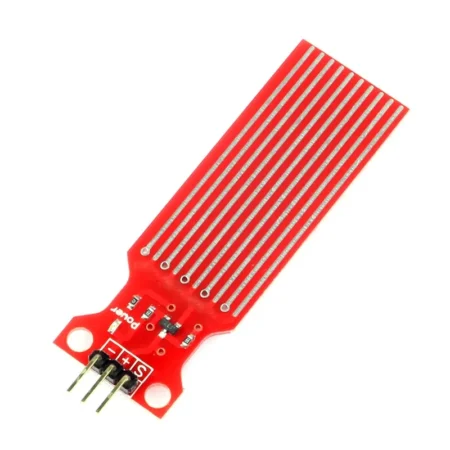
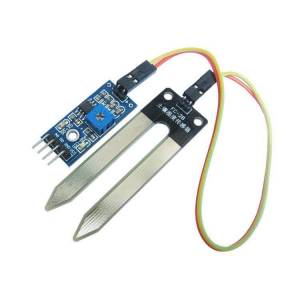
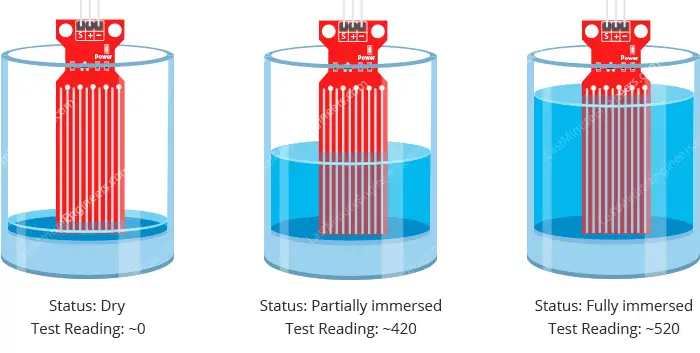
This water level detection sensor is a low‑cost, resistive probe board that outputs an analog voltage proportional to the wet length of its exposed traces. It’s ideal for quick experiments with Arduino/ESP32/Raspberry Pi to detect presence, drops, leaks, or approximate level within a short range. The sensing area is approximately 40 × 16 mm, and the module operates from 3–5 V, drawing less than 20 mA.
Unlike float switches or ultrasonic sensors, this board is designed for near‑surface/short‑range detection. For continuous immersion or corrosive liquids, consider a sealed or non‑contact solution; this board is best for learning, prototyping, and indicative sensing.
Key Features
- Operating voltage: 3–5 V DC (5 V nominal)
- Type: Analog water level sensor (resistive ladder)
- Detection area: 40 × 16 mm (approx.)
- Current draw: < 20 mA
- Board size: ~60–62 × 20 mm (PCB), slim profile
- Interface: 3‑pin header (SIG / +V / GND)
- Plug‑and‑play with Arduino analog inputs; simple mapping to 0–1023 (10‑bit ADC)
Specifications
Values reflect the widely used analog water level sensor board. Batch‑to‑batch cosmetic differences (silkscreen, header style) do not affect function.
| Parameter | Min | Typ | Max | Notes |
|---|
| Supply voltage | 3.0 V | 5.0 V | 5.5 V | 3.3 V MCUs supported |
| Current consumption | — | < 20 mA | — | Mainly via resistor network |
| Detection zone | — | 40 × 16 mm | — | Exposed copper traces |
| Board dimensions | — | 60–62 × 20 mm | — | Thickness varies with header |
| Output type | — | Analog (voltage) | — | Proportional to wet length |
| Operating temp. | -10 °C | — | +30 °C | Typical vendor guidance |
| Operating humidity | 10% | — | 90% RH | Non‑condensing guidance |

Pinout & Wiring
- SIG (A0): Analog output to MCU ADC
- +V: 3–5 V sensor power
- GND: Ground
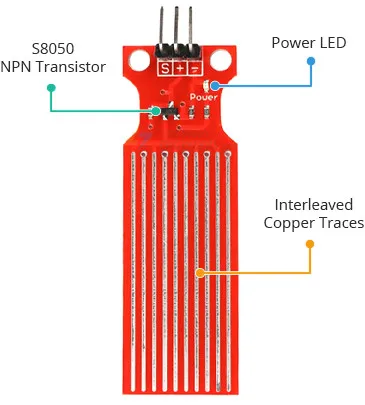
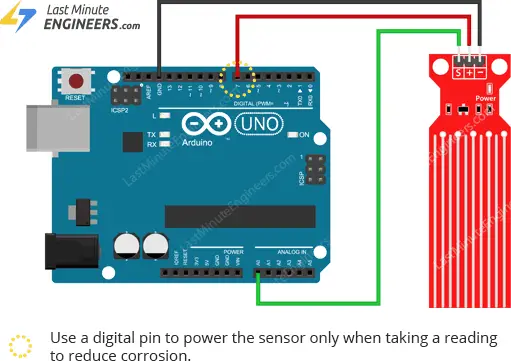
Quick start: Connect +5 V → +V, GND → GND, A0 → SIG. Read the analog value; higher values correspond to more wet area. Calibrate thresholds for your use case.
How It Works & Design Notes
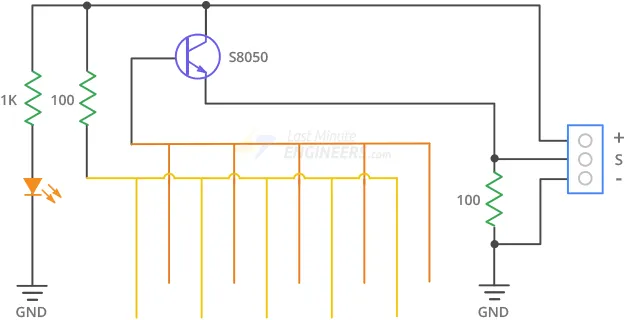
- Resistive principle: Water bridging across adjacent exposed traces forms a resistance ladder. The board converts this to a proportional output voltage.
- Calibration: Map the dry reading and the fully‑wet reading to your 0–100% scale. Use moving average or median filter to reduce noise.
- Corrosion & lifespan: The exposed copper can corrode with long‑term exposure, electrolytic action, or contaminated water. For reliability:
- Use distilled water for tests where possible.
- Power‑gate the sensor and sample intermittently (e.g., MOSFET on +V) to reduce electrolysis.
- Consider anti‑corrosion or float/ultrasonic level sensors for permanent installations.
- Not a linear level gauge: Output is monotonic but not perfectly linear; treat readings as indicative.
- EMI/ESD: Keep leads short; add a 100 nF ceramic decoupling near +V.
Example thresholding: For leak detection, trigger alarm if averaged reading rises above a dry baseline + margin. For simple tank “near full” indication, mount the board vertically and set a threshold near the desired waterline.
Typical Applications
- Leak or spill detection around tanks, pipes, or appliances
- Rain detection and near‑surface water presence
- Educational demos: converting analog values to percent level
- Simple over‑fill or low‑level alerts (short range)
What’s in the Pack
- 1 × Water level detection sensor module (analog board)
Quality, Shipping & Batch Notes
- QC: Visual inspection; sample units read at dry/wet setpoints.
- Batch differences: Trace color, connector orientation, and cable inclusion may vary.
- Handling: Avoid bending the board; do not power while shorting traces by hand.
Attachments & Resources
Info
- Brand: Generic module
- Model: Water Level Detection Sensor (Analog)
- Type: Resistive, analog output
- Supply: 3–5 V DC (5 V nominal)
- Detection area: 40 × 16 mm (approx.)
- Current: < 20 mA
- Interface: 3‑pin (SIG, +V, GND)
- Board size: ~60–62 × 20 mm (typ.)
- Net weight: ~4 g (assumption)
——— العربية ———
نظرة عامة
حساس مستوى الماء منخفض التكلفة يعمل بمبدأ المقاومات بين مسارات نحاسية مكشوفة، ويعطي إشارة تماثلية تتناسب مع طول الجزء المبتل. مناسب للتجارب السريعة مع Arduino / ESP32 / Raspberry Pi لاكتشاف وجود الماء أو التسرب أو مستوى تقريبي قريب من السطح. منطقة التحسس تقريبًا 40 × 16 مم، ويعمل بجهد 3–5 فولت مع استهلاك أقل من 20 mA.
المزايا
- جهد التشغيل: 3–5 فولت (5 فولت شائع)
- النوع: حساس ماء تماثلي
- منطقة التحسس: 40 × 16 مم (تقريبية)
- التيار: < 20 mA
- حجم اللوحة: حوالي 60–62 × 20 مم
- التوصيل: رأس 3 أطراف (SIG / +V / GND)
المواصفات
| البند | الحد الأدنى | النموذجي | الأقصى | ملاحظات |
|---|
| جهد التغذية | 3.0 V | 5.0 V | 5.5 V | يدعم 3.3 فولت |
| التيار | — | < 20 mA | — | شبكة مقاومات |
| منطقة التحسس | — | 40 × 16 مم | — | مسارات مكشوفة |
| أبعاد اللوحة | — | 60–62 × 20 مم | — | السمك يختلف حسب الهيدر |
| الخرج | — | تماثلي (جهد) | — | متناسب مع البلل |
الرجل والتوصيل
- SIG (A0): إلى مدخل تماثلي
- +V: 3–5 فولت
- GND: أرضي
إعداد سريع: وصل +5V وGND وA0 → SIG واقرأ القيمة. اضبط عتباتك للإنذار أو النسبة.
كيف يعمل وملاحظات التصميم
- مبدأ مقاومي: الماء يكمل مسارًا بين الشرائح النحاسية فتتغير المقاومة ومنها الجهد.
- المعايرة: حدّد قراءات الجفاف/البلل واسمح بفلترة متحركة.
- التآكل: لا تناسب الغمر الطويل. أوقف التغذية بين العيّنات، واستخدم حلولًا محكمة لمشاريع دائمة.
تطبيقات شائعة
- كشف التسرب حول الخزانات والأنابيب
- استشعار المطر ومستوى سطحي بسيط
- تعليم وتحويل القيم التماثلية إلى نسبة
المحتويات
- 1 × حساس مستوى الماء (تماثلي)
الجودة والشحن وفروقات الدفعات
- فحص بصري وقراءات جافة/مبللة لعينة من كل دفعة.
- قد تختلف الألوان وطريقة الوسم دون تأثير وظيفي.
معلومات
- العلامة: عام
- الموديل: Water Level Detection Sensor (Analog)
- النوع: مقاومي بخرج تماثلي
- التغذية: 3–5 فولت
- التيار: < 20 mA
- منطقة التحسس: 40×16 مم
- الحجم: ~60–62 × 20 مم